
If you’ve been car shopping recently, you may have heard the term CVT transmission and wondered what it is. For years, general knowledge has told us that there are only two types of transmissions: automatic and manual. Technically, this is still true as a CVT Transmission is a type of automatic transmission, however, CVT or Continuously Variable Transmission differs as it changes flawlessly through an infinite range of gear ratios whereas standard automatic transmissions traditionally have a fixed number of gear ratios. By the end of this article, you’ll understand the difference between automatic, and continuously variable transmissions and how they function.
Tci 6 Speed Automatic

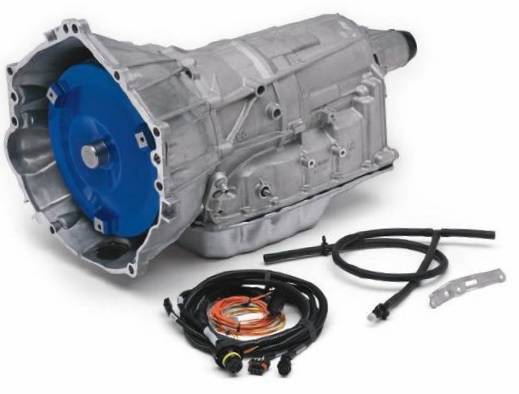
Designed for GM SBC, BBC, LS and Pontiac applications, as well as Fords and Chryslers, the 4L80E-based TCI® 6x Six-Speed Automatic Transmission is a fully programmable transmission that gives you six forward gears (2.97, 2.23, 1.57, 1.18, 1.00, 0.75) for quicker acceleration and increased fuel economy at cruising speeds and is capable of handling up to 850 horsepower. The Hydra-Matic 6L90 (production code MYD) is a six-speed automatic transmission produced by General Motors for use in rear- and rear-biased all-wheel-drive vehicles with a longitudinal powertrain. Aug 24, 2014 Looking at a car online and it says the transmission is a 6-speed automatic w/ manual shift? Not sure what that means. I don't know how to drive stick shift.
Automatics Transmissions vs. CVTs
Automatic transmissions contain a complex series of gears, brakes, clutches, and principal devices. Ordinary automatics possess a finite amount of gears that are referred to as speeds. For example, you may have heard the term 6-speed automatic. This refers to six gears within the transmission. Each gear is set to only reach a certain vehicle speed; when the driver keeps accelerating, the transmission must shift up through the gears starting with first, second, and so on.
In comparison, a CVT produces the most efficient engine speed for each driving situation and is constant even if the vehicle is rapidly accelerating. While there is no comparison in how a CVT operates from the driver’s perspective, as in changing gears from Park to Drive, everything else is a bit more complicated. A continuously variable transmission does not have individual gears, instead, it has one gear that is variable for all driving conditions. Unlike ordinary automatic transmissions, drivers will not feel the shift from one gear to the next. Instead, drivers will notice a change in engine speed or RPMs, often higher for acceleration and lower for cruising. CVTs are an example of how vehicle manufacturers are improving vehicles from day to day. And while this is a new way of creating power, CVTs have been gaining in popularity in recent years.
How CVTs Work
6 Speed Automatic Transmission Chevrolet
CVTs possess many microprocessors and sensors but the hydraulic pressure, spring tension, or centrifugal force used to create the force necessary to adjust two pulleys are the key to enabling the technology. The two pulleys are known as the driving “input” pulley and the driven “output” pulley. The driving pulley is connected to the crankshaft of the engine. The driving pulley may also be referred to as the input pulley because it is where the energy from the engine enters the transmission. The driven pulley is so named because the driving pulley is turning it. Also referred to as the output pulley, it transfers energy to the driveshaft.
6 Speed Automatic Transmission Vs Cvt
A belt rides in a groove between two cones on each pulley. When the two cones of a pulley are far apart, the diameter increases, the belt rides lower in the groove, and the radius of the belt loop moving around the pulley shrinks. The distance between the center of the pulleys and where the belt comes into contact with the groove is called the Pitch Radius. The gear is determined by the ratio of the pitch radius on the driving pulley to the pitch radius on the driven pulley. When one pulley increases its range the other decreases to keep the belt tight. As the pulleys change their radius, together, they create an infinite number of gear ratios ranging from low to high.
Six Speed Automatic Transmission Chevy
Is a CVT Right for You?
6 Speed Automatic Transmission For Chevy
Continuously variable transmissions produce marginally better fuel miles per gallon, especially for city drivers. They also produce simple and more efficient power and eliminate the feeling of shifting from gear to gear. However, CVTs take some time to get accustomed to. Drivers have complained of a low, continuous noise known as engine drone that can be bothersome to a select few. The best way to know before you purchase a CVT vehicle if it is right for you is with a good, thorough test drive.